Fishing with PVA Stringers
A PVA stringer is a brilliant boilie baiting strategy which, to be honest, is often overlooked by anglers. Regarded as an old-school carp angling tactic, it really is underused in the modern carp fishing scene. I’m sure at some point stringers will become fashionable in the future, as carp angling always moves full circle anyhow.
The humble PVA stringer has, I’m sure, caught me some bonus fish while other methods failed on that particular day or weekend. Being different, especially on those tricky waters, can really give you an edge over everyone else. You really sometimes need to do this if you would like to reap the rewards.
The tactic has many advantages. Here’s a few:
1. Can help stop rig tangles, especially when using braid hooklinks.
2. A brilliant method for casting to showing fish without causing too much disturbance.
3. Great winter tactic for applying a few baits around your hookbait as water temperatures drop and you would like to introduce less bait.
4. A good way of stopping the birds from homing in on your baits. One cast, job done. I would advise on using darker, less coloured visual baits though, to stop them homing in on your small trap.
5. A method not many anglers are using, so the fish just haven’t seen it too much. That’s one hell of an edge in its own right.
6. Very easy method to use for preparation, great for beginners getting into the sport.
7. If you’re on a budget, a very cost-effective way of fishing.
Making Your PVA Stringers
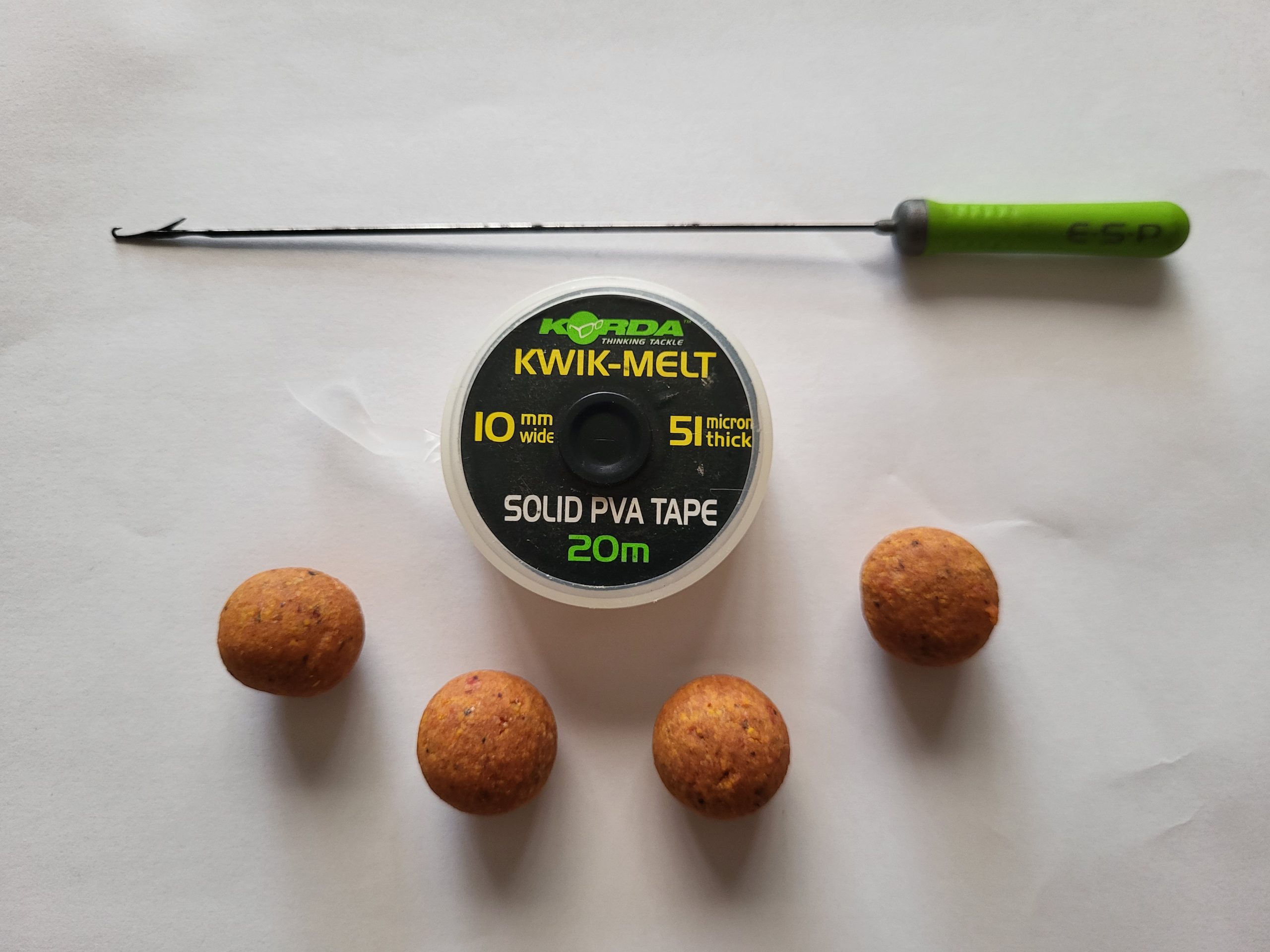
To make PVA stringers is very easy, especially for beginners, much easier and faster than making PVA solid bags etc.
All you need to buy is some PVA tape and a PVA baiting needle which is long and has a latch, which are readily available from most tackle shops or online marketplaces etc.
Here’s how to make your stringers.
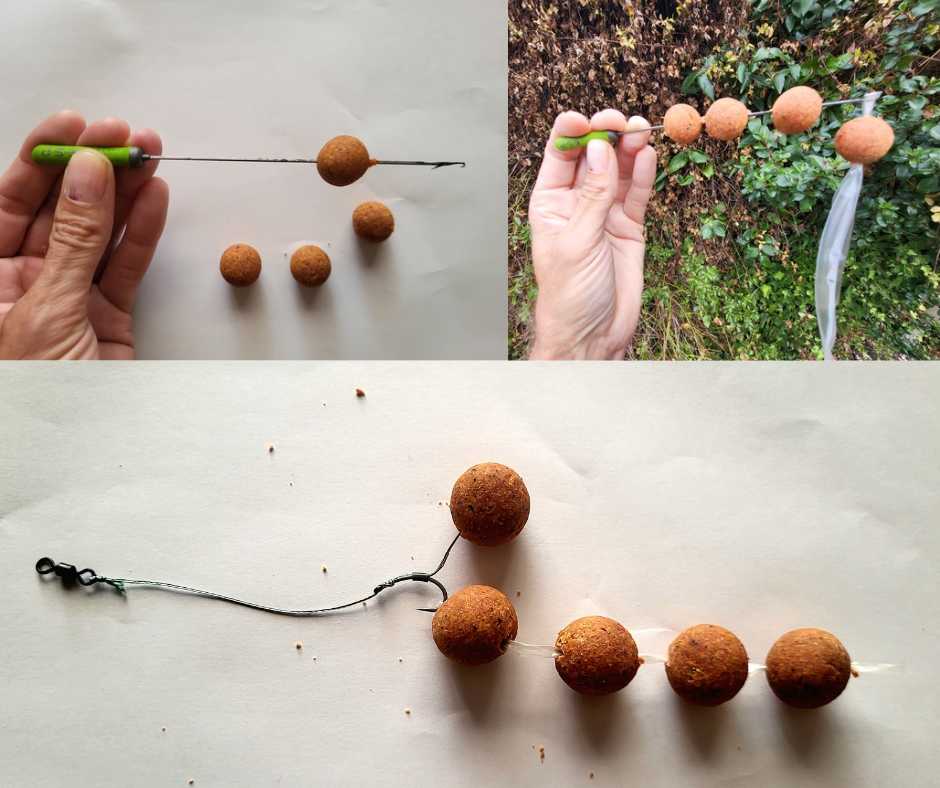
Step 1
Thread your boilies onto the stringer baiting needle. It’s really up to you how many you want to add. I usually add up to 5, depending on the boilie size and time of year.
Take your time and try and push the needle through the centre of the boilie. This just helps a little with casting but isn’t essential.
Step 2
Pull a length of PVA tape from the spool. I usually use around 10 inches, but this will be dependent on how many boilies you would like to add.
Cut that length with scissors. If you don’t have scissors, you can easily stretch and break some of the PVA tape off with your fingers.
One thing, please remember when using PVA: make sure your fingers are dry and your boilies are dry, not straight out of the freezer. But I do use the frozen boilies once they have thawed out.
Fresh bait is fine, but use the stringer straight away. Don’t store them. Only do that for shelf-life boilies.
Now loop the PVA tape over, so you’re doubling it up. You should be down to a 5-inch length.
Step 3
Using the PVA baiting needle, attach the hook latch to the loop end of the PVA tape. Then slowly thread the boilies up the PVA tape, leaving a gap between each boilie. I usually leave around 10 to 20mm. This just helps the PVA to melt when it sits on the lake bed.
Now your stringer is all made up, ready to fish.
You can also use boilie halves if you like. Just be extra careful threading them, as they are more likely to split or break while doing so, depending on the boilie structure.
Attaching the Stringers to the Rig
There are a couple of ways to attach a stringer for casting out.
One is by attaching the stringer to the lead swivel eye. In my opinion, I will only do this if a helicopter rig or chod rig are being used.
The reason why I do this is to stop the rubber beads moving on these types of setups, which ruins presentation and the rig’s efficiency.
If you were to attach the stringers to the hook, it really could be too much weight and force the rubber beads to move.
A small baited stringer with a couple of small boilies, you may get away with mounting it on the hook, but I’d rather not risk it.
The other method, and the best in my opinion, is to mount the stringers on the bend of the hook. Super fast, and boilies are directly next to your hookbait.
This method can be used for semi-fix leads or even running leads. Great for inline leads or lead clip setups where there are no helicopter-type setups being used.
Whichever method you use, make sure components are dry, the hook or swivel.
So, if you’re fishing and recasting, I will simply use a bit of tissue to dry out the hook or swivel, a simple way of removing the moisture.
The reality is, PVA stringers are so simple to make and use, beginner-friendly. An often underused, forgotten method which should not be.
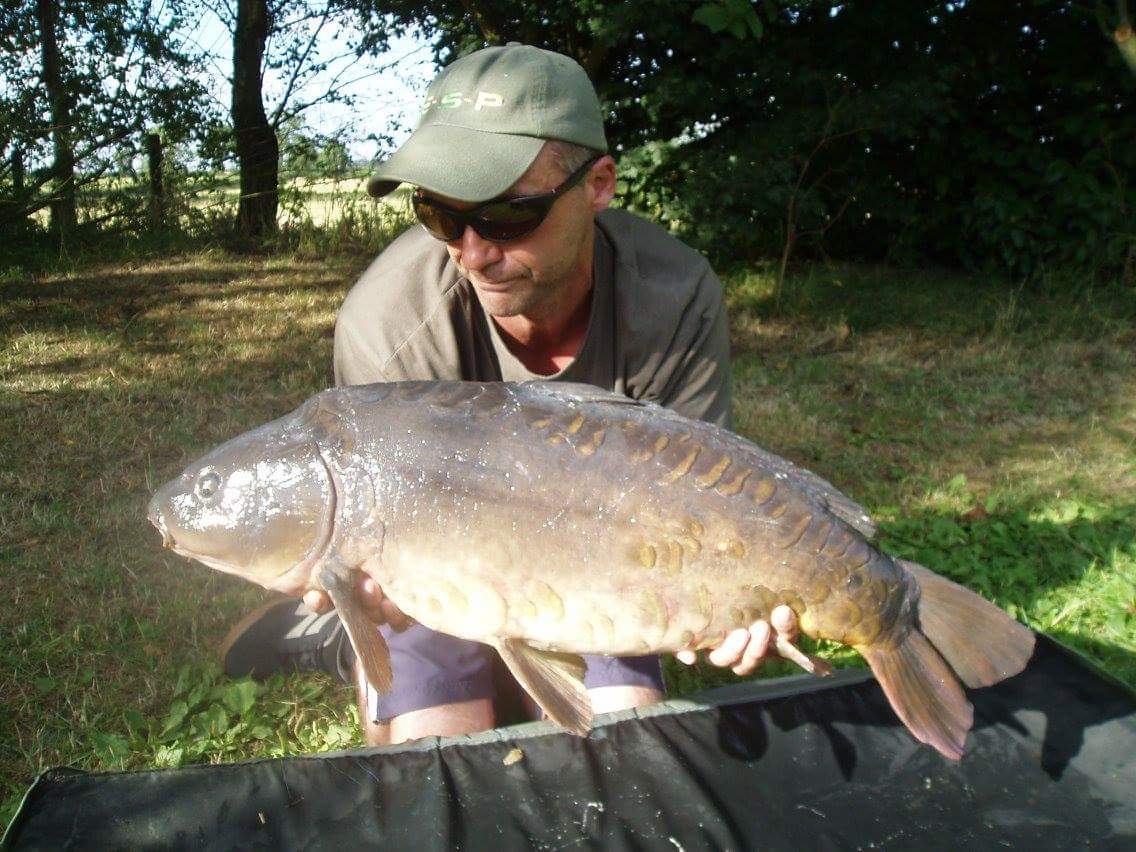
A deadly tactic on the right day. A very cost-effective way of fishing if you are on a budget.
Thank you for reading this article if you have got this far, and please give stringers a go. I genuinely believe you will not be disappointed.